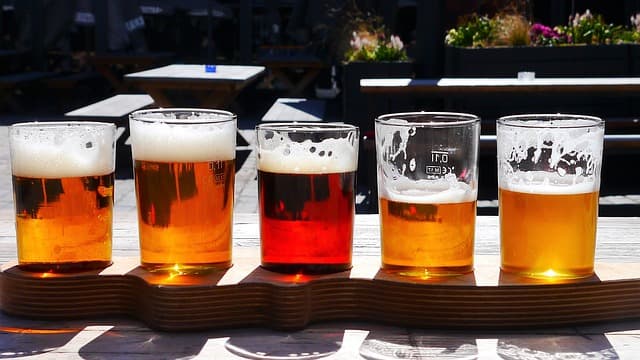
When we walk into a bar today and find at least one decent craft beer on tap alongside the mass-market brands, we owe a lot to the Boston Beer Company and its founder, Jim Koch. It was he who, in the mid-1980s, brought craft beer out of garages and onto the national stage, turning the Samuel Adams brand into a synonym for quality American lager and true beer patriotism.
From a family recipe to national success
The story began in 1984, when Harvard graduate, successful business consultant, and hereditary brewer Jim Koch decided to quit his job and go into beer. He revived an old family recipe for lager and began brewing beer on a small scale, offering it to Boston bars.
The first variety was Samuel Adams Boston Lager — a pure malt beer with a distinctive hop profile that contrasted sharply with the mass-produced American lagers of the time. It was a breath of fresh air and a return to flavor in an era when beer had become associated with bland, light soda.
Innovation and marketing — the secret to growth
But success was not limited to the recipe alone. Jim Cook demonstrated an outstanding flair for marketing and branding. The Boston Beer Company conducted one of the first major tasting campaigns, secured Samuel Adams’ presence in sports arenas and airports, and was not afraid to use patriotic symbols, associating the brand with the legacy of one of the founding fathers of the United States.
By the 1990s, Samuel Adams had become the “beer for connoisseurs” in mid-range establishments across the country — in fact, it was the only craft option in the era before the “craft boom.”
Expanding boundaries: cider, tea, and soda
Over time, Boston Beer Company embarked on bold experiments. Some of them were driven by consumer demand, others by entrepreneurial spirit. The company launched the Angry Orchard cider brand, the Twisted Tea line of cold sweet alcoholic tea, and also attempted to enter the hard seltzer market with Truly and other products.
These steps allowed Boston Beer to remain commercially successful, but caused irritation among part of the craft community, for whom “craft” should remain within the confines of pure brewing. Nevertheless, even skeptics cannot deny that without Boston Beer and Jim Cook, the modern market simply would not exist.
Boston Beer Today
Today, Boston Beer Company is one of the largest breweries in the United States and continues to produce some of the best craft beers available. In addition to the legendary Boston Lager, the lineup includes such hits as Rebel IPA, Cold Snap, Summer Ale, and a variety of seasonal releases. And initiatives such as the launch of Utopias — the most expensive and strongest beer in the country — show that the spirit of experimentation and ambition is still alive and well.
Conclusion
The Boston Beer Company is a symbol of a transitional period in the history of American brewing. From pioneer to giant, from classic lager to cider and soda, this is a company that once proved that craft beer can be mainstream without losing its taste and character.