Beer has many flavors, styles, and aromas. All of the drink’s qualities can only be revealed if it is served correctly. It is important to choose the right beer glasses, as their shape determines how fully the contents will reveal all their qualities.
Types of beer glasses
The perception of the same drink poured into containers of different shapes will be completely different. The head, its stability, and the intensity of the aroma will vary. Traditional beer glasses and mugs come in several types:
- Snifter. Visually reminiscent of cognac or brandy glasses. In terms of shape, it is a bowl on a stem, tapering towards the top. This geometry allows the aroma to be retained, making it suitable for drinks such as English barley wine, icebox, and strong Belgian beers.
- Tulip. A convex vessel with a short stem, a slight narrowing, and a slightly noticeable widening at the top.
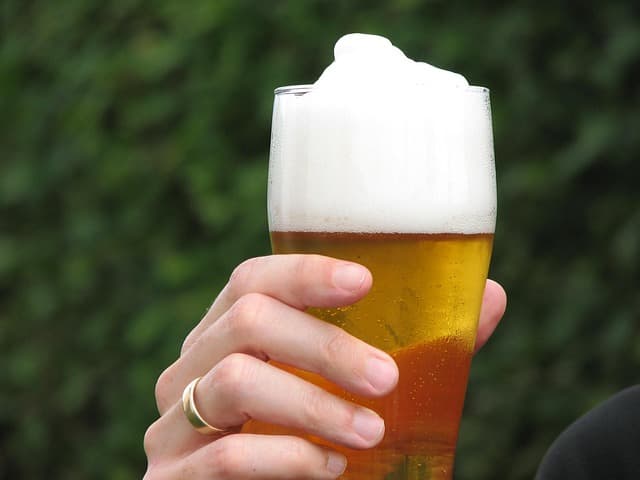
- Pilsner. The most popular type, which is a tall glass that narrows towards the bottom. When poured correctly, it forms a lush head of foam. It is used to drink strong German beer, pilsner, and lager.
- Goblet. This is a large, voluminous bowl placed on a thick stem. It is designed for dubbel, dark ale, and quadrupel.
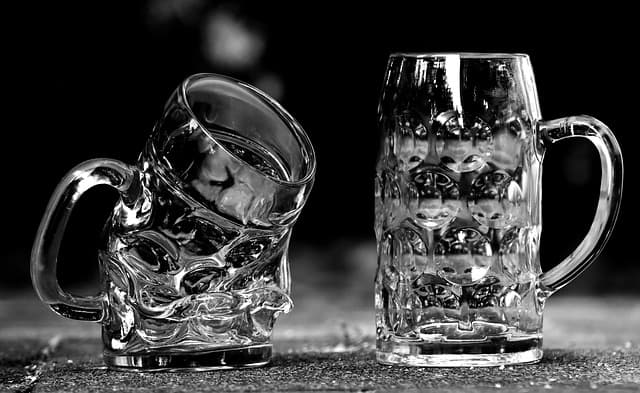
- Mug. These are traditional large-volume beer glasses with thick walls and a sturdy handle. You can drink anything from it.
- The pint glass is conical. It is a typical European beer glass for porter, ale, stout, and lager. Its volume is 0.568 liters (1 British pint) or 0.470 liters (1 American pint).
In cocktail bars, the latter type of glass is called a shaker. It is used to mix and serve cocktails. There are differences between a pint and a shaker — the thickness of the walls. The former has thinner walls.
Secrets of foam formation
This intoxicating drink is produced using two fermentation methods — top fermentation and bottom fermentation. The first is called lager, while the second includes porter, lambic, bitter, and stout.
If the bottom of the glass is sharp, a stable point of CO2 formation occurs. For this reason, the best glass for lager, which is predominantly present on our market, is a container that is pointed at the bottom. This base geometry prevents the drink from heating up under the influence of hand warmth. The cone holds the foam perfectly at the top.
The advantage of stemmed beer glasses is their elongated shape, which prevents the drink from being warmed by the hand, unlike a cognac glass. The short stem makes the glass stable and allows it to be quite spacious.